



How to Compare Decorative Panel Samples
Make a small sample work harder. Compare shortlisted finishes under the same light, test them beside the room’s real materials and keep the exact décor reference with the approved product specification.
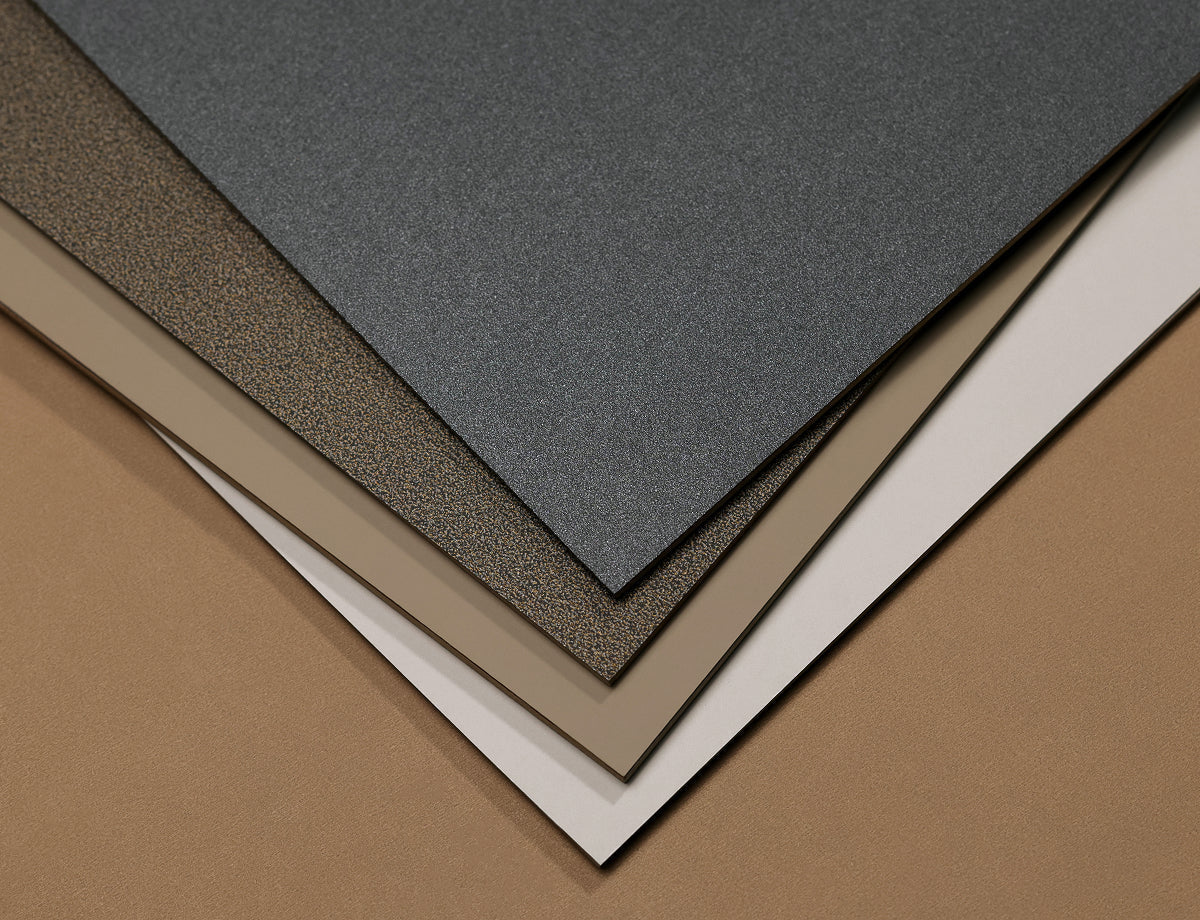
Begin with a shortlist
To compare decorative panel samples, put a small shortlist under the same light and judge colour, reflection, texture and pattern separately. Then review the preferred finish beside the actual neighbouring materials. This gives a clearer basis for cabinetry selection than comparing photographs taken in different conditions.
Verdécor’s 70 × 100 mm colour samples are free, with free shipping within Australia. Homeowners, designers and trade professionals can request them. This offer is for the small colour samples; larger displays and other sample formats should be checked separately with the team.
Start with two or three finishes that answer the same design question. For example, compare low-reflection solid colours for a quiet kitchen, or timber-look décors for wardrobe doors. The seven-collection selection guide helps narrow the direction before ordering samples.
Compare under consistent light
- Keep the light the same. Lay the samples together in daylight, then compare them under the proposed artificial lighting.
- Change the angle. Look from the front and side. Tilt each sample to reveal reflection, depth and any directional character.
- Include the room’s materials. Place the sample beside the benchtop, flooring, wall colour and metal finish that will actually be used.
- Return to the location. Review the shortlist where the joinery will sit, including areas that receive less daylight.
Observe what changes rather than asking only whether a sample looks good. Does the white look warmer beside the benchtop? Does the grain become more prominent at a distance? Does a gloss face reflect a light you would prefer not to see? Those observations help the team choose deliberately.
Separate colour, touch and pattern
A small swatch is useful for colour, reflection and physical touch. It cannot show the whole pattern of a woodgrain, stone-inspired finish or broad cabinet elevation. Ask to see a larger display or full-sheet image when the grain, veining or pattern scale is important.
For NanoMatte, FineMatte and NanoGloss, compare the actual touch and reflected light as well as colour. For oak- and walnut-look panels, review grain direction and the amount of variation across the larger pattern.
Keep a photograph of the proposed palette as a project record, but retain the labelled physical sample for approval. Screen settings, lighting and photography can change the appearance of an image.
Check the face and edge together
Ask the cabinet maker to review the matching edge beside the face. A small colour difference or change in reflection may be more noticeable at the corner of a finished door than on a flat mood board. Confirm the exact edge product and fabrication detail as part of the specification.
The sample’s appearance also does not confirm a panel’s load capacity, moisture exposure limits or suitability for a kitchen worktop. Those questions depend on the product form, core and intended use. Use the product-form guide to check what is being supplied.
Keep a short approval record
- Collection, décor name and colour code from the sample label.
- Location and component: for example, wardrobe door or kitchen end panel.
- Approved grain direction and larger-pattern reference, where relevant.
- Neighbouring materials and the lighting used for the comparison.
- Product form, core grade, thickness, faces and edge confirmed by the fabricator.
- Approval date and the person responsible for the final order.
This record lets the homeowner’s design choice reach the workshop without relying on a colour nickname or an unlabelled photograph.
Request samples or plan a visit
Browse Verdécor colours, contact the KnoxOne team, or plan a Braeside showroom visit to compare a broader material setting. Ask about larger displays if the project needs a fuller view of a pattern.
Anyone can request the free 70 × 100 mm colour samples with free shipping within Australia. Paid products are ordered through an approved trade account; homeowners can give the approved sample references to their cabinet maker.
Back to top
Leave a comment
This site is protected by hCaptcha and the hCaptcha Privacy Policy and Terms of Service apply.