



Elementa: Material Character for Joinery
Elementa introduces stone, fabric, leather and other material-inspired effects in decorative panels. Choose it by looking at pattern, texture and scale together, then relate the selected surface to the neighbouring finishes and the component being made.
Start with the character of the surface
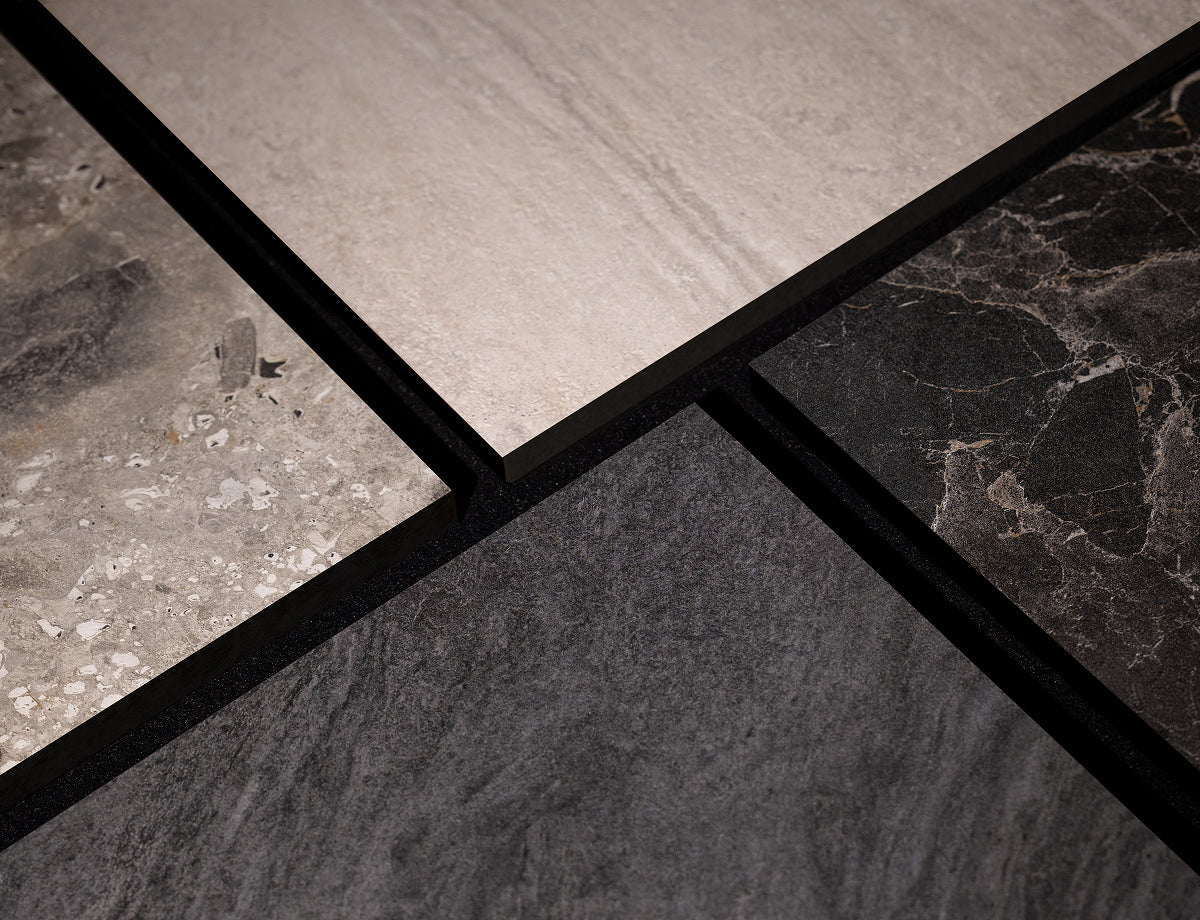
Elementa gives a room material expression beyond solid colour and timber grain. The collection includes stone, fabric and leather-inspired directions, with pattern and texture varying by décor. Each offers a different way to compose cabinetry and feature faces.
The collection includes Aurora Marble 7001, Greige Hemp 7004 and Brown Calfskin 7006 as examples of those three expressions. Their names describe the visual direction. The supplied product remains a decorative panel: a stone-look finish is not a stone slab, and a leather-look face is not upholstery leather.
Read the pattern at the right scale
A small chip can establish colour and touch, but it may show only a small part of a marble pattern or textile-like repeat. Review a larger sample or full-pattern view alongside the intended door, side panel or feature elevation.
Mark the direction in which the décor will be used. Look at where visual movement falls within the component, and how the pattern meets neighbouring faces and edges. Compare the surface under the project lighting: relief and reflection can change the emphasis of a pattern as someone moves through the room.
Give each material a role
A stone-inspired vertical face can provide a focal point while quieter cabinetry supports it. Fabric- and leather-inspired effects can introduce finer texture beside timber character or a plain colour. Build a small palette in which each selected finish has a reason to be there.
The KnoxOne showroom’s Arden Kitchen demonstrates Elementa’s stone expression on an island’s vertical face. That design reference concerns the vertical face only. The worktop is a separate material decision, with different exposure and performance requirements.
Place the Elementa sample beside actual flooring, worktop and hardware samples, rather than considering each finish in isolation. A full palette makes warm and cool undertones easier to judge.
Turn the sample into an identified panel
Elementa complete panels are supplied double-sided. The exact décor, core, dimensions and coordinating edge must still be selected from the current item record. Discuss any shaped or curved detail separately with the fabricator; a flat-panel sample does not specify how that detail will be made.
Explore the Elementa collection, retain the approved sample identity, and check the technical information for the intended use. For a coordinated material session, bring the surrounding finishes to the KnoxOne selection room.
Leave a comment
This site is protected by hCaptcha and the hCaptcha Privacy Policy and Terms of Service apply.